Bedding · Materials and care
Inside a Vispring Wool Pad: Materials, Fit, and Care
A mattress pad is a modest layer with a practical brief: soften the contact between sleeper and mattress, and help keep the sleep surface cleaner. In the Vispring Lux design, British wool filling meets a cotton outer and fitted skirt. Knowing what those materials do—and what they do not do—makes it easier to fit, use, and care for the pad well.
Published November 20, 2026
A small layer, a specific job
Most bedding performs its work quietly. A fitted sheet lies between the body and the bed; a protector helps guard the mattress; a topper can change the feel of the surface more substantially. A wool pad occupies a middle ground in appearance, but its purpose is narrower than the word “topper” sometimes suggests. It adds a softly quilted layer and a modest degree of cushioning while helping shield the mattress from routine wear.
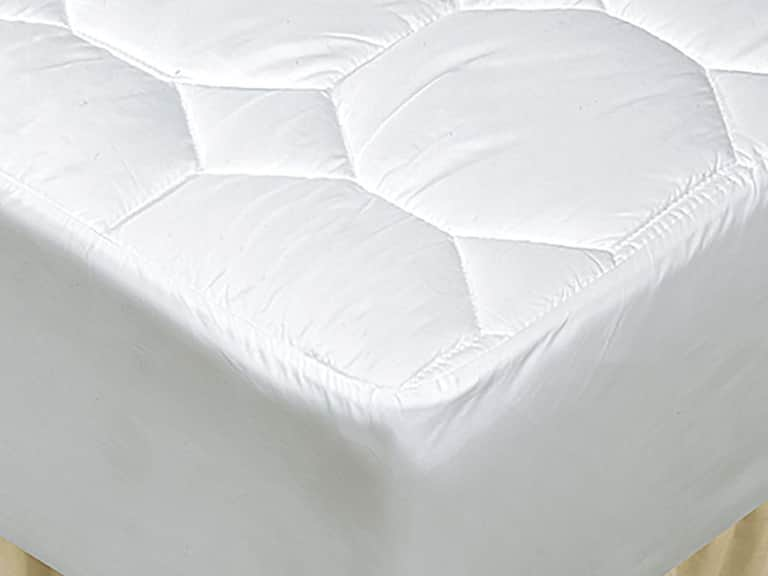
The Vispring Lux Skirted Mattress Protector is described as having a cotton outer, British wool filling, a fitted style, and an elasticated skirt. Those details tell a useful story about how it is built. Cotton forms the surface fabric; wool provides the inner layer; the skirt helps hold the pad in place. The result is a bedding component intended to sit on top of the mattress beneath the fitted sheet.
That distinction matters. A pad can contribute a little softness, but it is not necessarily designed to correct a mattress that feels too firm, too soft, or uneven. Nor should it be assumed to provide a waterproof barrier: the available construction information describes cotton and wool, not a waterproof membrane. For a waterproof layer or full encasement, check the specifications of the chosen product rather than inferring protection from the word “protector.”
The Vispring design and its stated construction can be reviewed on the Vispring Lux Skirted Mattress Protector product page. As with any bedding, product instructions and the dimensions of the particular mattress should be checked before fitting or washing.
What wool contributes
Wool is a natural animal fiber with a characteristic spring and crimp. In bedding, it is valued for its soft, resilient feel and for holding air within its structure. Those qualities can create a layer that feels less flat than a single sheet of fabric. In a quilted pad, the filling is contained between outer fabric layers, so the hand and loft depend not only on the wool but also on the quilting, density, and overall construction.
Wool is also associated with insulation and moisture management. These are material properties, not guarantees of a particular night’s sleep. A person’s comfort depends on many variables: room temperature, humidity, mattress construction, sleepwear, bedding layers, and individual preference. A wool-filled pad may feel balanced to one sleeper and too warm, too substantial, or simply different to another. The sensible approach is to understand the material, then assess it in the context of the whole bed.
“Breathable” is often used as shorthand for how air and water vapor interact with a fabric or filling. It should not be taken to mean that a layer can keep every sleeper cool in every climate. Wool and cotton are natural fibers, but the finished pad is still a constructed textile, and the conditions around it shape how it feels. A cotton cover, wool filling, fitted sheet, duvet, and room environment all work together.
Wool’s spring can also help a pad retain a softly cushioned character. It is not the same as the contouring response of memory foam, nor does it necessarily provide the deep, adjustable loft of a thick topper. The purpose is more restrained: a little added surface comfort, with a natural-fiber filling and a washable-looking layer between the sleeper and mattress. Actual care requirements, however, should be established from the product label or manufacturer’s instructions, not assumed from the fiber name.
Cotton on the outside
The cotton outer gives the pad its immediate textile surface. Cotton is familiar in bedding because it can be woven or knitted into fabrics with different weights, textures, and levels of flexibility. In a mattress pad, the cover needs to contain the fill and withstand regular contact with sheets and movement on the bed. The exact feel depends on its weave, quilting, and finish, details that are not fully conveyed by the word “cotton.”
The Vispring Lux description identifies the pad as cotton outer and British wool filled. It does not specify a waterproof layer. It is therefore best understood as a washable, hygienic barrier against some everyday contact and wear, rather than as a substitute for a waterproof protector where liquid protection is required. Perspiration, skin oils, dust, and small spills can affect bedding over time, but the degree of protection a pad offers depends on its construction and care.
A natural-fiber composition may be an important preference for people choosing bedding, but “natural” is not a synonym for maintenance-free. Wool and cotton can both be affected by heat, agitation, detergents, and prolonged dampness. A thoughtfully chosen fiber still needs the right routine. The care label remains the authority on what the finished item can tolerate.
Pad, protector, or topper?
Bedding terminology is not always consistent across brands. A mattress protector is usually chosen primarily to help protect a mattress from common sources of soiling and wear. Depending on its construction, it may be waterproof, water-resistant, or simply a washable fabric layer. A mattress pad commonly adds a modest amount of softness while also covering the mattress. A topper is generally thicker and more directly intended to alter the feel of the bed.
These are useful distinctions, not rigid universal definitions. Product names can overlap, so construction details matter more than the label alone. If liquid protection is essential, look for explicit information about a waterproof or water-resistant barrier. If changing firmness or pressure relief is the goal, compare the thickness and materials of a purpose-made topper. If the need is a little extra softness and a removable layer, a pad may be the more relevant category.
The Vispring Lux is presented as a softly quilted mattress protector with British wool filling and a fitted skirt. That suggests a protective layer with some cushioning, not a deep comfort system. Shoppers comparing a wool pad with a foam topper should not expect identical performance: a foam layer may contour more closely, while a quilted wool pad offers a different, less pronounced surface change.
- Choose a protector when mattress coverage and a removable, washable layer are the priority; verify whether it offers the particular spill or allergen barrier needed.
- Consider a pad when a modestly cushioned surface and routine mattress coverage are both desirable.
- Compare toppers when the intention is to change the bed’s feel more substantially.
Fit begins with measurement
A well-made pad can still feel troublesome if it does not suit the mattress. The Vispring Lux description gives a fitted style, elastic, and a pocket depth of 13.75 inches. Pocket depth is the dimension to compare with the mattress, but mattress measurements are not always as simple as length and width. A pillow-top design, a separate topper, or another substantial layer can increase the total height the skirt must accommodate.
Measure the mattress from its top surface to the base, including any layer that will remain beneath the pad. Then compare that figure with the stated pocket depth and allow for the way the skirt is designed to stretch. Do not assume that a mattress’s advertised depth includes a separate topper. If the mattress has an unusual profile or a thick comfort layer, confirming fit with the seller or manufacturer may prevent a frustrating mismatch.
Dimensions and fit terms can vary by brand. The listed 13.75-inch pocket depth is a useful specification for the Vispring product, but it is not a promise that every mattress of that nominal depth will fit identically. Fabric tension, elastic placement, mattress shape, and added bedding layers can all influence how the pad sits. A fitted skirt should secure the pad around the mattress without being stretched to its limit.
When putting the pad on, identify its orientation before pulling the corners into place. Work gradually around the mattress, smoothing the quilted surface rather than yanking sharply at the skirt. The aim is a flat, even layer, with the elastic seated beneath the mattress edges. Once fitted, check that the pad does not bunch or pull noticeably at the corners when you move across the bed.
A pad that is too small may strain at the seams or pop off during the night. One that is too large may wrinkle, shift, or create an uneven surface beneath the sheet. Either condition can undermine comfort and make laundering more awkward. Correct sizing is not a decorative detail; it is part of the pad’s everyday performance.
Care: gentle handling is not a guess
The care information supplied for the Vispring Lux recommends monthly washing, a gentle machine cycle in cold water with like colors, and a natural detergent. It advises avoiding whiteners or bleach, using non-chlorine alternatives when necessary, and line drying or tumble drying on low. Fabric softeners and dryer sheets are not recommended. These product-specific instructions should take precedence over generic advice for wool or cotton.
Why keep the routine gentle? Heat and aggressive agitation can put stress on natural fibers and on the seams that hold a quilted pad together. A low-temperature approach can reduce unnecessary strain. Gentle movement and a suitable detergent also help avoid treating the pad as though it were an ordinary load of robust cotton towels. The goal is a clean item that retains its shape and construction, not a wash cycle that is merely convenient.
Before laundering, check the sewn-in label for any updates or additional instructions. If it differs from a general product description, follow the label or seek clarification from the manufacturer. Bedding appliances vary in drum capacity, and a bulky pad needs room to move through water and rinse properly. If the machine is too small to handle it comfortably, a larger-capacity machine or professional cleaning advice may be the safer option.
Use only the amount and type of detergent appropriate to the care instructions. Bleach, strong whiteners, and fabric softeners can be unsuitable for natural-fiber bedding or its finish; the Vispring guidance specifically advises against them. Avoid leaving the pad wet in the machine for an extended period. After washing, inspect it for damp areas and make sure it is thoroughly dry before returning it to the bed.
Drying deserves particular attention. The product guidance permits line drying or low-heat tumble drying. High heat is not a shortcut worth taking with a wool-filled quilted item: excess heat may affect fibers, elastic, or the pad’s shape. If line drying, support the pad evenly so its weight does not hang heavily from one point. If tumble drying, follow the label closely and remove the item when dry rather than leaving it to cycle unnecessarily.
Once dry, smooth the pad and check the stitching, skirt, and elastic for signs of strain. Store it in a clean, completely dry place if it is not going straight back onto the mattress. A breathable storage bag or clean linen cupboard is preferable to a damp, tightly sealed environment. This simple pause between laundering and use helps prevent stale odors and unwanted moisture from being trapped in the bedding.
A practical routine for everyday use
A mattress pad does not need elaborate treatment to earn its place in the bed. Regularly changing sheets, airing the bedding when practical, and dealing promptly with spots can help keep the sleep surface fresh. If the pad gets wet or visibly soiled, check its care instructions and act accordingly rather than leaving moisture to sit beneath the fitted sheet.
It may be tempting to wash a protector frequently simply because it is called a protector. The Vispring guidance recommends monthly washing, but household circumstances differ. Follow the stated directions and consider the actual use: a clean guest bed, a frequently used family bed, and a bed exposed to spills may call for different attention. More frequent laundering is not automatically better if it means repeatedly subjecting a natural-fiber pad to unnecessary wear.
Do not use a pad to conceal a mattress problem. If the mattress has a persistent indentation, broken support, or an uneven surface, a thin quilted layer is unlikely to repair it. It may soften the immediate contact but cannot restore the mattress’s underlying structure. The role of the pad is supportive and protective in a limited sense; it is not a substitute for a sound mattress or a properly specified topper.
Likewise, consider the full arrangement of the bed. A pad sits below the fitted sheet, so the sheet must accommodate the combined height of mattress and pad. If the fitted sheet begins to lift at the corners, check both its pocket depth and the total height of the layers beneath it. The right pad can still create a poor result when paired with a sheet that is too shallow.
What to check before choosing
Materials and marketing language can make bedding sound more complicated than it is. A few direct questions often clarify whether a wool-filled pad suits the intended setup:
- What is the filling? The Vispring Lux description specifies British wool.
- What covers the filling? It specifies a cotton outer.
- How does it fit? The design is fitted, with an elasticated skirt and a stated 13.75-inch pocket.
- Does it provide waterproofing? The listed construction does not specify a waterproof membrane, so do not assume it does.
- How should it be washed? The listed guidance calls for a gentle cold wash, low-heat tumble drying or line drying, and no fabric softener or dryer sheets.
- Will it change the bed’s feel? It may add a softly quilted layer, but it is not described as a thick topper.
Clear specifications help separate material qualities from expectations. Wool can be a breathable, insulating filling; cotton can provide a familiar textile cover; a fitted skirt can help the pad stay in place. None of those points alone establishes a particular level of waterproofing, a fixed change in temperature, or a dramatic transformation of mattress firmness. A careful read of the construction and care details is more useful than relying on a broad label.
The quiet logic of a natural-fiber layer
The case for a wool pad is not that it will solve every bedding concern. It is that a well-fitted, washable layer can make a bed feel more finished and help place a barrier between daily use and the mattress itself. Wool filling and a cotton outer give the Vispring Lux a recognizably natural-fiber construction, while the fitted skirt addresses the practical problem of keeping the pad in position.
For anyone considering one, the decisive details are uncomplicated: measure the mattress and any permanent topper, make sure the stated pocket depth is suitable, understand whether the required protection is waterproof or simply a washable cover, and follow the care guidance closely. A pad that fits, stays dry, and is cleaned as directed is more likely to remain useful than one chosen on material descriptions alone.
In the end, bedding is an arrangement of layers, each with a distinct task. The wool pad is neither the whole bed nor a replacement for every other component. Its contribution is quieter: a softly quilted surface, a natural filling, and a fitted layer between mattress and sheet. That is enough—provided the fit and expectations are right.
Frequently asked questions
Is a wool mattress pad the same as a mattress topper?
No. The terms are sometimes used loosely, but a pad generally adds a modest quilted layer and coverage, while a topper is typically thicker and intended to change the feel of the mattress more noticeably. Check construction and thickness rather than relying on the product name.
Is the Vispring wool pad waterproof?
The described construction lists a cotton outer and British wool filling, but does not specify a waterproof membrane. If waterproof protection is needed, confirm that feature explicitly before choosing a product.
How do I know whether the fitted skirt will fit?
Measure the mattress depth, including any topper that will remain underneath the pad, and compare the total with the stated 13.75-inch pocket depth. Fit can also depend on mattress shape and elastic stretch, so ask the manufacturer if the measurement is close or the mattress profile is unusual.
Can I wash the pad like ordinary cotton bedding?
Do not assume so. The Vispring guidance calls for a gentle cold wash with like colors, no bleach or fabric softener, and line drying or low-heat tumble drying. Always check the care label and follow the product-specific instructions.