Bedding • Materials and care
How to Evaluate an Organic Crib Mattress: Materials, Fit, and Care
Choosing a crib mattress can feel like a decision about labels: organic, natural, certified, breathable. But a nursery sleep surface has to do more than meet a materials preference. Its construction, firmness, dimensions, and care instructions all matter. A thoughtful evaluation starts with safety and fit, then looks closely at what the mattress is made of and what its certifications actually verify.
“Organic” is useful information, but it is not a substitute for checking whether a mattress is appropriate for the crib, how it is constructed, or how it should be maintained. The goal is a firm, flat, properly fitting sleep surface that can be kept clean and used according to current safety guidance.
Begin with the sleep surface, not the label
For an infant, the first questions are practical: Is the mattress intended for the exact crib in use? Is it firm and flat? Does it fit securely without hazardous gaps? Can its cover and any accessories be used as directed? These questions apply whether a mattress is made with conventional materials or marketed as an organic crib mattress.
Safe-sleep recommendations from public health authorities, including the American Academy of Pediatrics, emphasize placing babies on their backs on a firm, flat, non-inclined surface designed for infant sleep. The sleep area should be kept clear of loose bedding, pillows, comforters, toys, and positioners. A fitted crib sheet should be the only bedding layer over the mattress unless the crib or mattress manufacturer provides specific, compatible instructions. Follow current guidance from your local health authority and the product’s safety instructions.
Terms such as “natural,” “non-toxic,” “eco-friendly,” and “breathable” can sound reassuring, but they do not by themselves establish that a product is safe for a baby or suitable for a particular crib. Ask what the claim refers to, whether it is independently substantiated, and whether the mattress meets applicable safety requirements. A mattress that carries a meaningful fiber certification still needs to be firm, correctly sized, and intended for infant use.
Understand the materials and construction
A crib mattress is a system of layers, not simply a fabric choice. Its core supplies the support and firmness; its cover helps contain the construction and may affect cleaning and moisture resistance. Seams, edges, quilting, ventilation features, and any waterproof layer can also shape performance. When comparing options, look for a clear materials list that describes each major component instead of relying on a broad front-of-package phrase.
Core materials
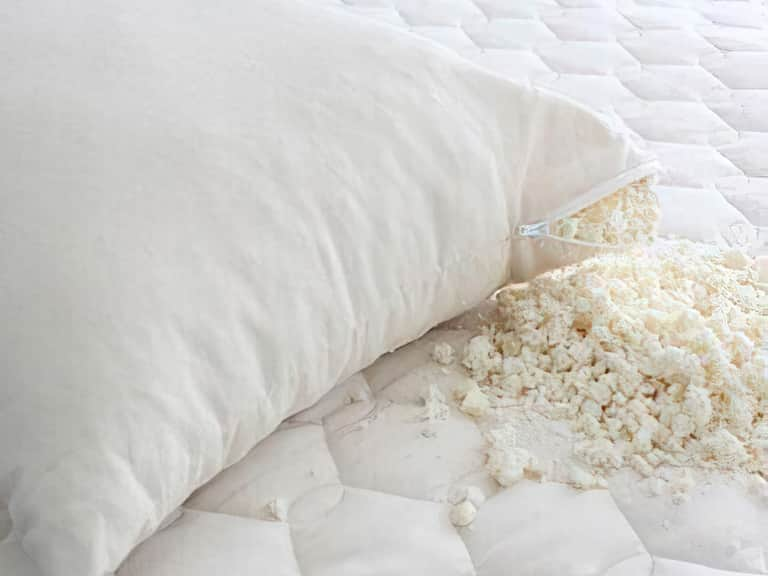
Common cores include foam and innerspring constructions. Foam mattresses vary in composition and density, while innerspring models use metal coils and surrounding layers. Some products use latex or other materials, sometimes in combination. No material name alone tells you whether a mattress is firm enough for infant use; the finished product’s design and testing matter. Do not judge firmness by pressing a corner in a store or by comparing it with an adult mattress. Review the manufacturer’s intended use, safety information, and testing documentation.
If a product describes itself as organic, find out which components are covered by that claim. It may refer to the textile cover, a fiber layer, or a specified portion of the product rather than every ingredient and process. A precise description is more informative than an unqualified claim. Also check whether the materials and construction are disclosed in enough detail for you to understand what sits beneath the cover.
Covers, seams, and moisture barriers
The cover is the part most likely to encounter spills and routine handling. Read whether it is removable, washable, wipe-clean, or intended to stay in place. A removable cover can make some cleaning tasks easier, but it must be replaced and secured exactly as directed. Never add an aftermarket cover, pad, topper, or liner unless the mattress and crib manufacturers specifically confirm that it is compatible. An added layer can change the sleep surface or interfere with fit.
Water-resistant or waterproof layers may help limit liquid reaching the core, but their presence does not eliminate the need for prompt cleaning or careful inspection. Ask what the barrier is made of, whether it is integrated into the mattress, and how the product should be cleaned. Claims about airflow or temperature regulation should be interpreted cautiously: they do not replace the basic requirements of a firm, flat, uncluttered sleep surface.
Check seams and edges for a consistent finish and review the instructions for handling the mattress. Do not cut, alter, or remove structural layers. If a cover is damaged, a seam opens, or the mattress becomes misshapen, contact the manufacturer for guidance rather than attempting a repair that could change its safety or fit.
Read certifications as specific evidence
Certifications can help clarify how materials were grown, processed, or tested. They are most useful when you understand their scope and verify that the certificate applies to the product or component being considered. A logo alone is not a complete materials statement, and different standards address different questions.
What GOTS may tell you
The Global Organic Textile Standard (GOTS) addresses organic fibers and specified environmental and social criteria across textile processing. For a crib mattress, a GOTS claim may apply to a textile component, such as a cover, or to a wider certified product, depending on the certificate and the product’s status under the standard. Do not assume that a certified cover makes the mattress core organic. Look for the exact product name, the certified organization, and a clear explanation of the components covered.
When a listing mentions GOTS, ask whether it provides a certification reference or other verifiable documentation. The certificate should be current and connected to the product in question, not simply to a company, unrelated textile, or supplier. If the wording is unclear, request a component-by-component explanation.
Different standards answer different questions
Some certifications focus on organic fiber production; others assess chemical content, emissions, or manufacturing practices. They should not be treated as interchangeable. A standard that evaluates certain substances in textiles, for example, does not necessarily certify that every layer is organic or establish that a mattress is appropriate for an infant. Ask what was tested, which parts were included, and what the certification does not cover.
It is also helpful to distinguish certification from regulatory compliance. Certification is a voluntary or standard-specific verification process; legal safety requirements are a separate matter. For a crib mattress, confirm that the product is intended for the relevant market and meets applicable requirements for infant sleep products. In the United States, the Consumer Product Safety Commission (CPSC) sets requirements that apply to crib mattresses. Check current official guidance and product documentation rather than relying on a marketing summary.
Measure for a secure crib mattress fit
Fit is a safety question, not merely a matter of appearance. A mattress should be made for the crib model or size, sit securely within the frame, and leave no hazardous gaps at the sides or ends. Even a mattress that is marketed as “standard size” should be checked against the crib manufacturer’s instructions. Cribs and mattresses can differ, and labels such as standard, mini, or portable do not replace a precise compatibility check.
Before buying, record the crib’s required mattress dimensions and any limits on mattress thickness. Then compare those requirements with the mattress manufacturer’s stated dimensions and intended crib types. If the crib manual is missing, seek the manual from the manufacturer or contact its customer service. Do not estimate fit based on a photograph or assume that a mattress will work because it fits another crib in the same general category.
Once the mattress is in place, inspect all sides and corners. It should lie flat and not bow, curl, or slide around. Follow the crib maker’s instructions for checking fit; do not use homemade spacers, extra padding, or rolled fabric to fill a gap. If the mattress does not fit as specified, stop using that combination and contact the manufacturers. A snug, correct fit should come from compatible products, not an improvised adjustment.
Pay attention to mattress height as the baby grows. Cribs typically have adjustment settings, and the manufacturer’s manual explains when and how to change them. Keep the mattress at the correct level for the child’s development and follow all instructions about the crib’s assembly and use. A well-chosen mattress cannot compensate for an incorrectly assembled crib or a setup that ignores the crib’s limits.
Make sense of product claims and comparisons
Product pages often place several appealing claims together: organic cotton, low emissions, natural latex, breathable construction, waterproof protection, or chemical-free materials. Treat each as a separate statement. Ask what part of the mattress it describes, what evidence supports it, and whether the language is precise enough to compare with another product.
- “Organic”: Which fiber or component is certified, and by whom?
- “Non-toxic” or “chemical-free”: What substances were assessed, using what method, and does the wording avoid an absolute claim that cannot be demonstrated?
- “Waterproof”: Is the barrier built into the mattress, and what cleaning method preserves it?
- “Breathable”: What does the manufacturer mean by the term, and does the claim have independent support?
- “Hypoallergenic”: What specific allergen or material concern is addressed? This wording is not a guarantee that no child will react.
- “Made in”: Does the statement identify where the product was assembled, where its materials came from, or both?
Comparison is easier when the same questions are asked of every option. A short checklist can prevent a prominent label from overshadowing practical details: intended use, firmness and flatness, exact dimensions, certification scope, cover construction, cleaning instructions, warranty terms, and a direct way to contact the manufacturer.
Plan for cleaning before the first spill
Care instructions are part of the product’s performance. Before purchasing, find the official cleaning directions for the whole mattress and for each removable component. Some covers may be washable; others may be designed for spot cleaning. A core may not be washable at all. Avoid assuming that a cover can be machine-washed, that a mattress can be soaked, or that household disinfectants are suitable. Follow the stated method and contact the manufacturer if the instructions are incomplete.
For an everyday spill, act promptly. Remove the fitted sheet, then clean the affected area in the manner the manufacturer specifies. Use only the recommended products and amount of moisture. Let the surface dry completely before putting the mattress back into service, and do not place a baby on a damp surface. Avoid harsh chemicals, bleach, steam, or heat unless the instructions explicitly allow them; these can damage materials or leave residues.
Routine care should include checking that the mattress remains flat, clean, and undamaged. Inspect the cover, seams, and edges during sheet changes. Keep the product away from excess moisture and follow any storage directions if it needs to be moved. Do not rely on fragrance, a deodorizer, or a disinfectant to solve a persistent odor or visible deterioration. If the mattress has been soaked, develops mold, is torn, or no longer retains its shape, ask the manufacturer whether it should be replaced.
Wash fitted sheets according to their care label and keep a clean spare available if possible. For infants, however, convenience should never lead to adding loose layers or an unapproved pad. A protector or mattress pad is not automatically suitable for a crib just because it fits an adult mattress. Use only accessories explicitly allowed for the specific crib and mattress, and follow current safe-sleep guidance.
Questions worth asking the manufacturer
Clear answers can reveal whether a company understands its own product and whether its claims are precise. Before deciding, consider asking:
- Is this mattress expressly designed and tested for infant use?
- What are the exact dimensions and thickness, and which crib models or sizes is it intended to fit?
- What materials make up the core, cover, and any moisture barrier?
- Which components, if any, are covered by organic certification, and can the certification be verified?
- What safety standards and regulations does the product meet in the country where it will be used?
- How should the mattress and cover be cleaned, and what products or methods should be avoided?
- What should be done if the mattress is damaged, becomes misshapen, or is exposed to a substantial spill?
- Are replacement covers or other components available, and are they approved for this model?
Keep the product label, receipt, and care instructions. These details are useful if you need to verify a model, check a recall notice, make a warranty request, or contact the manufacturer later. If you are buying secondhand, be especially cautious: the model, condition, fit, and history may be difficult to verify. Check current recall information and follow official recommendations about used infant sleep products.
A practical decision framework
There is no need to turn a crib mattress purchase into a contest of impressive-sounding materials. Start by eliminating options that are not intended for infant use, do not meet applicable requirements, or cannot be confirmed to fit the crib. From the remaining choices, compare construction, documented certification scope, cleaning needs, and the clarity of the manufacturer’s information.
An organic crib mattress may suit a family’s material priorities, particularly when the organic claim is specific and verifiable. But the word “organic” does not guarantee a particular firmness, a precise fit, a simple cleaning routine, or suitability for every crib. Those qualities have to be assessed independently. Likewise, a mattress made from a different material can still be a suitable choice if it meets safety requirements and fits the intended crib.
Naturepedic is one name families may encounter while researching organic bedding, but brand familiarity should not replace model-specific checks. For any manufacturer, read the information for the exact mattress under consideration, not a general company statement or description of a separate product. Confirm the construction, dimensions, testing, certifications, and care instructions for that model.
The bottom line
Evaluating a crib mattress is a sequence of checks. First, confirm that it is intended for infant sleep and meets relevant safety requirements. Next, verify its dimensions and compatibility with the crib, and make sure it provides the firm, flat surface required for safe sleep. Then examine its layers, identify exactly what any organic or other certification covers, and learn how to clean and inspect it over time.
Materials matter, but they are only one part of the decision. A well-supported choice is one whose claims can be understood, whose fit can be confirmed, and whose care instructions can realistically be followed. When a claim is vague or a fit is uncertain, pause and ask the manufacturer rather than filling in the gaps with assumptions. In a nursery, clarity is more valuable than a long list of labels.
Quick checklist
- Confirm that the mattress is intended for infant use and meets applicable safety requirements.
- Match its exact dimensions and thickness to the crib manufacturer’s specifications.
- Use a firm, flat sleep surface and keep the crib free of loose bedding and unapproved accessories.
- Identify the materials in the core, cover, and any moisture barrier.
- Verify which components an organic certification covers instead of relying on a broad label.
- Read the official cleaning and drying instructions before use.
- Inspect the mattress and cover regularly; seek manufacturer guidance if either is damaged or misshapen.